
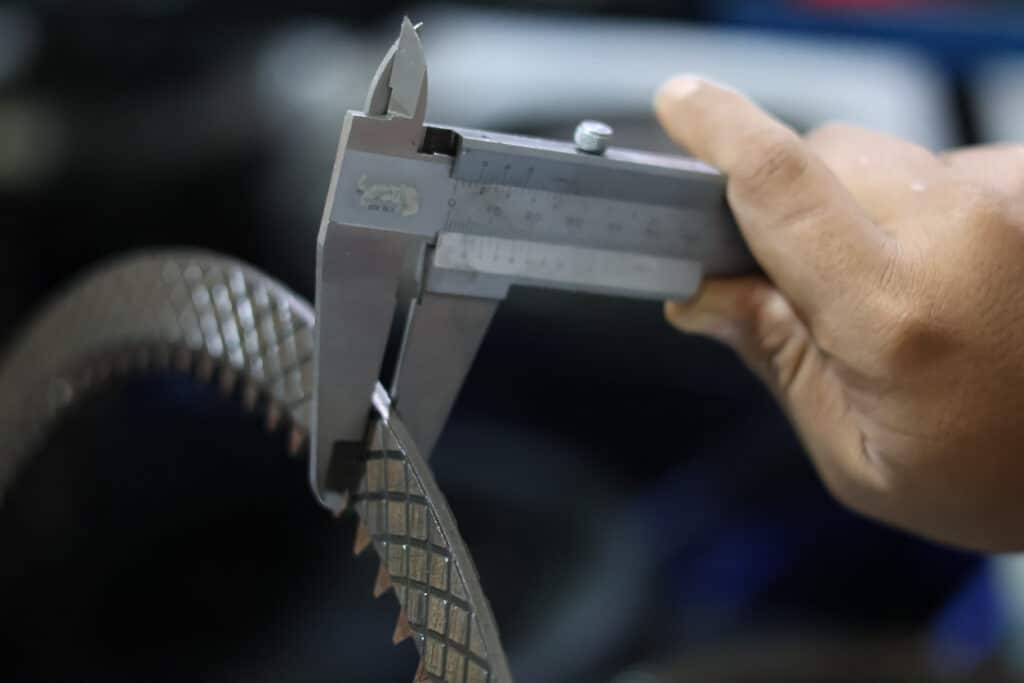
Material thickness is one of the most important factors in metal fabrication. It affects everything from strength and durability to forming, welding, weight, and overall manufacturing cost. Selecting the right material thickness helps ensure that fabricated parts perform properly while remaining practical and cost-effective to produce. At D+M Metal products, understanding material thickness is an important part of helping our customers create reliable, manufacturable parts that meet their project requirements.
What Is Material Thickness?
Material thickness refers to the measurement of how thick a sheet or piece of metal is. In sheet metal fabrication, thickness is often measured in either inches or gauge, depending on the material and application.
Steel, stainless steel, aluminum, and galvanized steels are all common materials used in fabrication. Each material behaves differently at various thicknesses, which is why selecting the proper thickness requires careful consideration of the part’s intended use.
Why Material Thickness Matters
Choosing the correct material thickness directly impacts the performance and manufacturability of a fabricated part. Thickness can influence:
- Structural strength
- Weight
- Durability
- Flexibility
- Weldability
- Bend radius requirements
- Production cost
Material that is too thin may lack the necessary strength or durability, while material that is too thick may increase weight, material costs, and fabrication difficulty unnecessarily.
Strength and Durability
One of the primary reasons for selecting a certain material thickness is to achieve the required strength. Thicker materials generally provide greater load-bearing capacity, increased impact resistance, improved rigidity, and better long-term durability. This is especially important for parts exposed to stress, vibration, heavy use, or outdoor environments.
However, thicker material is not always the best choice. Overengineering a part can increase costs and create manufacturing challenges without providing meaningful performance benefits.
Forming and Bending Considerations
Material thickness also affects how metal behaves during forming and bending operations.
As thickness increases:
- More force is required for bending
- Minimum bend radius requirements change
- Springback becomes more significant
- Tooling considerations become more important
Improperly designed bends in thicker materials can lead to cracking, distortion, or dimensional inaccuracies. Understanding how thickness impacts forming helps fabricators produce accurate, high-quality parts while minimizing defects.
Welding and Assembly
Thicker materials often require different welding techniques, heat settings, and joint designs than thinner materials. Material thickness influences:
- Weld penetration requirements
- Heat input
- Distortion control
- Assembly methods
Thin materials may warp from excessive heat, while thicker materials may require multiple welding passes or additional preparation. Selecting the appropriate thickness helps ensure strong, reliable welds and smoother assembly processes.
Weight and Cost Impacts
Material thickness has a direct effect on both weight and cost. Thicker materials use more raw material, increase shipping weight, require more processing power, and may slow production speeds. For many projects, balancing strength requirements with weight and cost considerations is an important part of efficient product design. An experienced fabricator can help determine the most practical thickness for both performance and manufacturability.
Precision and Tolerances
Different material thicknesses can also affect dimensional tolerances and cutting precision.
For example:
- Thin materials may flex during processing
- Thick materials may require slower cutting speeds
- Certain tolerances become more difficult at extreme thicknesses
Fabricators must account for these factors to maintain accuracy and consistency throughout production.
Working with an Experienced Fabricator
Material thickness decisions should be made with both performance and manufacturability in mind. Choosing the correct thickness helps ensure that fabricated parts perform reliably while remaining cost-effective and manufacturable. Careful planning and experienced fabrication support can help prevent production issues and improve final product quality.
Working with an experienced fabrication partner helps identify the best balance between strength, cost, weight, and production efficiency. At D+M Metal Products, we work closely with customers to select the right materials and thicknesses for their applications while maintaining high standards for quality and precision.
If you need help selecting the right material thickness for your fabricated parts, contact D+M Metal Products to discuss your project requirements and fabrication goals.