
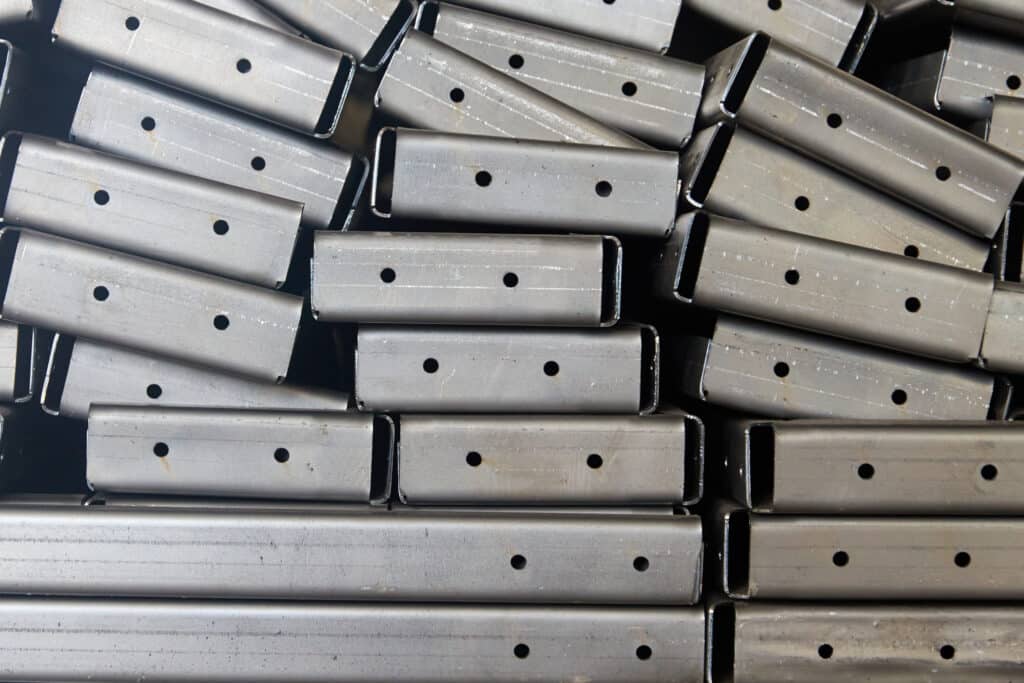
In metal fabrication, hole placement might seem like a minor detail, but it can have a major impact on part performance, manufacturability, and overall cost. Whether holes are used for fasteners, alignment, wiring, or airflow, their location must be carefully considered during the design and fabrication process.
Poor hole placement can lead to weak parts, deformation during forming, or even complete part failure. On the other hand, well-planned hole placement improves structural integrity, simplifies production, and ensures the final product functions exactly as intended.
Structural Integrity and Strength
One of the most important reasons hole placement matters is its effect on the strength of the material. Every hole removes material, which reduces the overall strength of the part. Placing holes too close to an edge or too close to each other can create stress concentrations. These areas are more likely to crack, deform, or fail under load. This is especially critical in parts that experience vibration, weight, or repeated use.
A general best practice is to maintain adequate distance between holes and from edges to preserve the material’s strength and prevent tearing or distortion.
Interaction with Bends and Forming
In sheet metal fabrication, hole placement must also account for bending and forming operations. If a hole is placed too close to a bend line, the material may stretch or compress during forming. This can distort the hole, causing it to become oval-shaped or misaligned. In some cases, it can even lead to cracking along the bend.
Proper spacing between holes and bend lines helps maintain dimensional accuracy and ensures the part forms correctly without compromising quality.
Assembly and Fit-Up
Hole placement plays a critical role in how parts come together during assembly. Misaligned holes can make it difficult or impossible to install fasteners, align components, or achieve a proper fit.
Even small inaccuracies can lead to increased assembly time, rework, or the need for secondary operations like slotting or drilling adjustments.
Designing with precise hole placement ensures smoother assembly, better alignment, and a more reliable final product.
Manufacturing Efficiency and Cost
From a production standpoint, poorly placed holes can increase fabrication time and cost.
For example:
- Holes too close to edges may require special tooling or slower processing speeds
- Tight spacing between holes can limit tooling options
- Poor placement may require additional setups or secondary operations
By designing with manufacturability in mind, you can reduce complexity, speed up production, and keep costs under control.
Tolerances and Precision
Hole placement is not just about location, it’s also about accuracy. Tight tolerances are often required for parts that need to align with other components or accept fasteners.
Fabricators must consider how cutting methods (laser, punch, etc.) and material movement during forming can affect final hole position. Accounting for these factors during design helps ensure that parts meet specifications without costly adjustments.
Partnering with an Experienced Fabricator
The best way to avoid issues with hole placement is to involve your fabrication partner early in the design process. Experienced fabricators understand how design decisions impact production and can recommend adjustments that improve performance and efficiency.
At D+M Metal Products, we work closely with our customers to make sure every detail—down to hole placement—is optimized for quality, strength, and manufacturability.
Hole Placement Matters
Hole placement may seem like a small detail, but it plays a big role in the success of a fabricated metal part. From maintaining structural integrity to ensuring smooth assembly and efficient production, proper hole placement is essential. Taking the time to get it right in the design phase can prevent costly issues later and lead to better-performing, more reliable parts.
If you have questions about part design or hole placement, contact D+M Metal Products to discuss your project. We’ll help you optimize every detail for performance and manufacturability.