
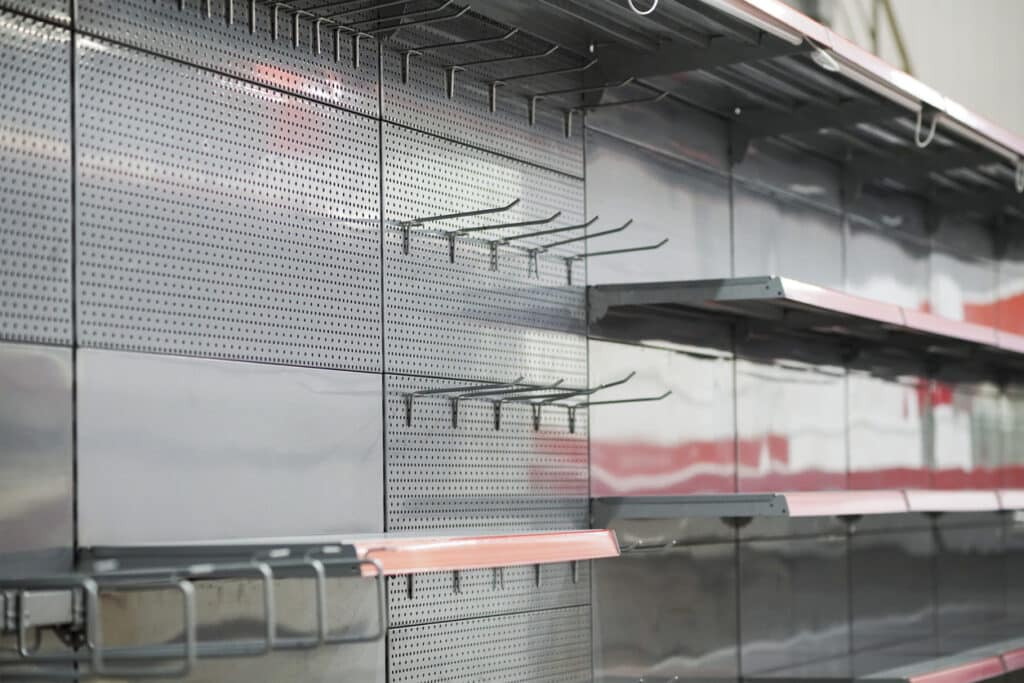
Point-of-purchase displays are one way businesses market their products. These attention-grabbing, in-store displays are often located near the checkout lane where customers make purchasing decisions, but they can also be found throughout the store near the merchandise they are trying to sell. POP displays come in a variety of designs. What factors should you consider when designing an effective display for your company’s products?
Why Are POP Displays Effective?
The primary reason POP displays are effective as marketing is that they stand out. They are often placed in the “action alleys” of stores that get the most foot traffic. For this reason, they are often more cost effective than advertising or other promotions in terms of marketing.
Additionally, impulse buying cannot be discounted as a percentage of sales because 30 percent of consumers will make a purchase they did not intend to buy before they came into the store. The longer consumers spend in a retail store, the more likely they are to purchase something that was not on their grocery list. This is true no matter the type of retail outlet. This means that the point-of-purchase display continues to be an important and effective marketing tool.
Types of POP Displays
Pop displays can be temporary, semi-permanent, or permanent. Temporary displays are much more likely to be made of materials like corrugated cardboard that are not made to last forever, making them a very inexpensive display option. Semi-permanent displays are built from materials like glass or acrylic and made to last longer – up to a year – even with significant handling. Finally, permanent displays are designed to last for years and so are constructed from metal, glass, plastic, or wood. They tend to be larger, will often resemble a kiosk, and are the most expensive product display type.
Even if you are unfamiliar with store marketing terminology, if you’ve spent any time in big box stores or grocery chains, you will recognize display cases, end caps, counter displays, dump bins, and floor stands. These are all types of POP displays.
When deciding which type of display is best for your product, you will need to consider several factors. The POP display doesn’t just hold the product, it must actively advertise it to customers in an eye-catching and effective way. Sometimes they are even designed to educate customers about the product or the need it is designed to meet. Consider what you want to communicate to your customers, whether that’s the desirability of the product or a special price. This should be incorporated into the display’s design.
Where the POP display will be located in the store is another important consideration. Where is your ideal customer most likely to be? If you are marketing to a specific demographic, like children, your POP display may need to be at a different height than products marketing to adults. Smaller items may move better in a counter display at checkout than in a dump bin or on an end cap.
Lastly, the store decor will also influence your POP display’s design. It should stand out in a way that will get noticed but not clash with its surroundings. Bright colors catch the eye, but they can be tacky in some settings and send the wrong message to consumers.
Do You Need a POP Display?
Impulse purchasing is one customer trend that is only increasing, so POP displays can be a very cost effective way to improve sales of your products, especially since they are relatively inexpensive to produce. D+M Metal Products has long fabricated parts for POP displays for our clients. We work with them to implement their ideas, assisting with design improvements for more effective manufacturing if necessary. If you need POP display parts, call us today for more information or request a quote. We will be happy to work with you to make your project a successful reality.