
“Metal fabrication” is the modern term we use for the combination of metalworking processes that cut, shape, and assemble metal parts, but the history of people working with metal goes back over 6,000 years. It’s a long and fascinating story, as humans learned to work with metal and the things they created in turn shaped human history. In this blog we will briefly discuss the highlights of the history of metal fabrication.
Ancient History
Man first began working with metal between 7000 and 3300 B.C., with the earliest known examples dating back to the Neolithic period. Around 6000 B.C. copper smelting became common in Southwestern Asia.These people were using copper to make tools, weapons, and jewelry.
Around 3300 B.C. was the advent of bronze, an alloy made from copper and tin. This era’s name came from this discovery: the Bronze Age. Bronze is much stronger and more durable than copper or tin, so it was soon in demand for tools and weapons.
Over two thousand more years would pass before ironworking emerged and ushered in the Iron Age. The relative abundance and strength of iron revolutionized metal fabrication.
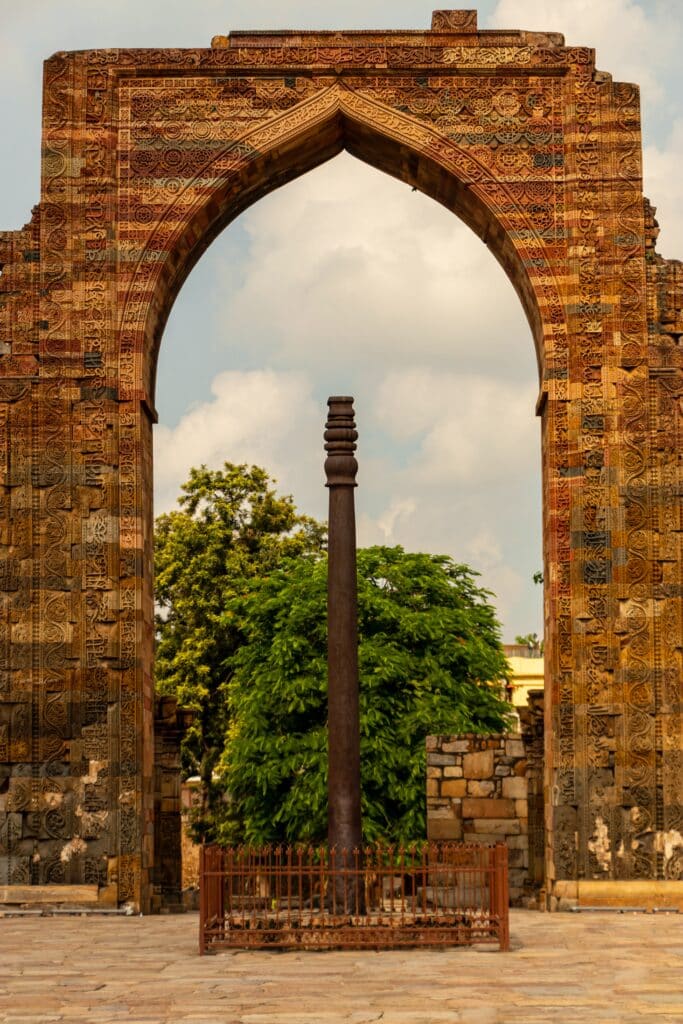
It’s during this period that a marvel of ancient metal fabrication was created, the The Iron Pillar of Delhi. This monument is located in the Qutb Complex in Delhi, India, and continues to baffle scientists and engineers today. It dates back to the 4th century CE during the reign of Chandragupta II, a ruler of the Gupta Empire.
The Iron Pillar of Delhi is 24 feet tall, made of mostly wrought iron, and weighs about 6.5 tons. Despite being 1,600 years old and continuously exposed to the elements, it has corroded very little. Scientists believe this is because the iron the ancient Indian craftsmen used was very pure so a thin protective layer of rust formed on its outside that prevented further corrosion.
Medieval Period and Later
During the medieval period, blacksmiths and metalworkers played a crucial role in creating armor, weaponry, and agricultural tools. Metalworking was in consistently high demand because kings and nobles were undertaking enormous building projects like castles and cathedrals as a show of strength and piety. These often incorporated metalwork with intricate designs and decorative ironwork.
The Industrial Revolution of the 18th and 19th centuries brought significant advancements in metal fabrication. The development of machinery and steam power forever changed the manufacturing process.
The next major advancement in metalworking was the mass production and standardization of metal parts. This made railroads possible and changed the face of warfare as guns and other weapons could be more quickly produced, assembled and disassembled, and easily repaired. The Springfield rifle, for instance, revolutionized the wartime experience of soldiers. The Model 1842 was the first small arm produced in the U.S. with fully interchangeable, machine-made parts. The 1903 model was used extensively in both world wars.
Modern Metal Fabrication
During the 20th century there was massive expansion of metal fabrication with the introduction of new techniques and technologies, including the development of electric arc welding and various metalworking tools, such as CNC machines, plasma cutters and laser cutters. These allowed for much more precise and efficient fabrication.
Innovations in materials, like the use of alloys, aluminum, and titanium, have expanded the possibilities in metal fabrication. It’s now an essential aspect of modern engineering and construction and in demand across industries, including the automotive, aerospace, and manufacturing sectors.
The History of Metal Fabrication
Throughout history, metal fabrication has continually evolved, adapting to people’s needs in every era. The skill and artistry of metalworkers have produced everything from everyday tools and decorations to architectural wonders. Advancements in technology have made metalworking processes today more efficient and precise. Metal fabrication continues to shape the world we live in, and we can only imagine how it will change and develop in the years to come.